

The biology of stress : 7 organ reactions explained
Most people believe stress is a mindset problem. A matter of attitude. Something you should be able to manage if you just "stay positive."
Yet trauma-aware science tells a different story.
Stress isn't a thought pattern, it's a biological event, unfolding through your nervous system, hormones, organs, breath, muscles, and mind. When you add unresolved trauma or chronic overwhelm on top of this physiology, the stress response gets trapped on, shaping how your body functions day after day.
Burnout is not simply the result of "too much work." It's what happens when the body never receives evidence of safety.
Understanding this changes everything. It dissolves shame and reframes your experience. It helps you see that symptoms are not failures but intelligent survival responses.
Why your nervous system is not your enemy
Trauma isn't just an event. It's the impact the event (or chronic pressure) leaves inside your body.
This is exactly why 2 people can live through the same experience, yet only one develops long-term symptoms. Trauma is the physiological imprint of experiences that were too much, too fast, too soon, or too long.
What we know from trauma physiology:
- The nervous system becomes more sensitive to threat
- The stress response activates faster
- The body has a harder time returning to baseline
So when stressors pile up: deadlines, conflict, emotional labour, life transitions, chronic pressure... your body responds not only to the present moment but to everything it remembers.
This is why burnout often hits the people who appear "strongest," most responsible, or most capable on the outside. Their bodies have been carrying the load for years.
What happens inside the body during chronic stress
To understand trauma-informed burnout recovery, we need to understand the stress response itself. Stress is not mental weakness. It is biology, and it follows a predictable sequence.
Below is what happens, step by step, when your stress response is triggered.
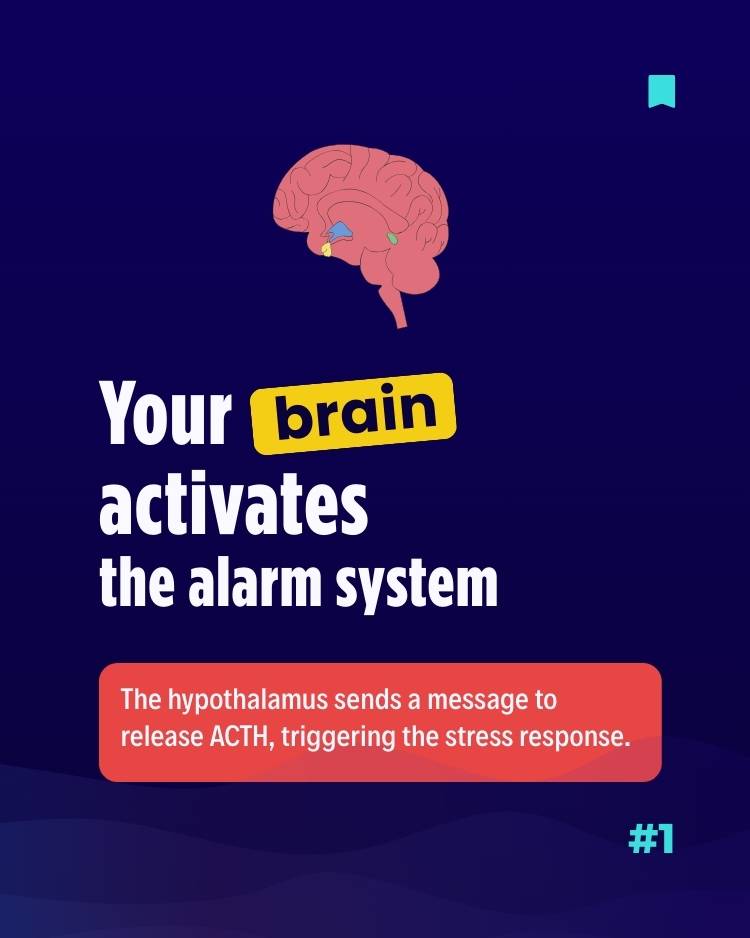
1. The brain pulls the fire alarm
The signal begins in the hypothalamus, the region responsible for detecting danger.
When it perceives a threat, physical, emotional, or even imagined, it triggers the release of ACTH (adrenocorticotropic hormone).
ACTH is the signal that tells your body, "Something might not be safe."
If you carry trauma, this detection system becomes more vigilant. Meaning your brain activates the alarm more quickly and more often, sometimes for threats that aren't actually there.
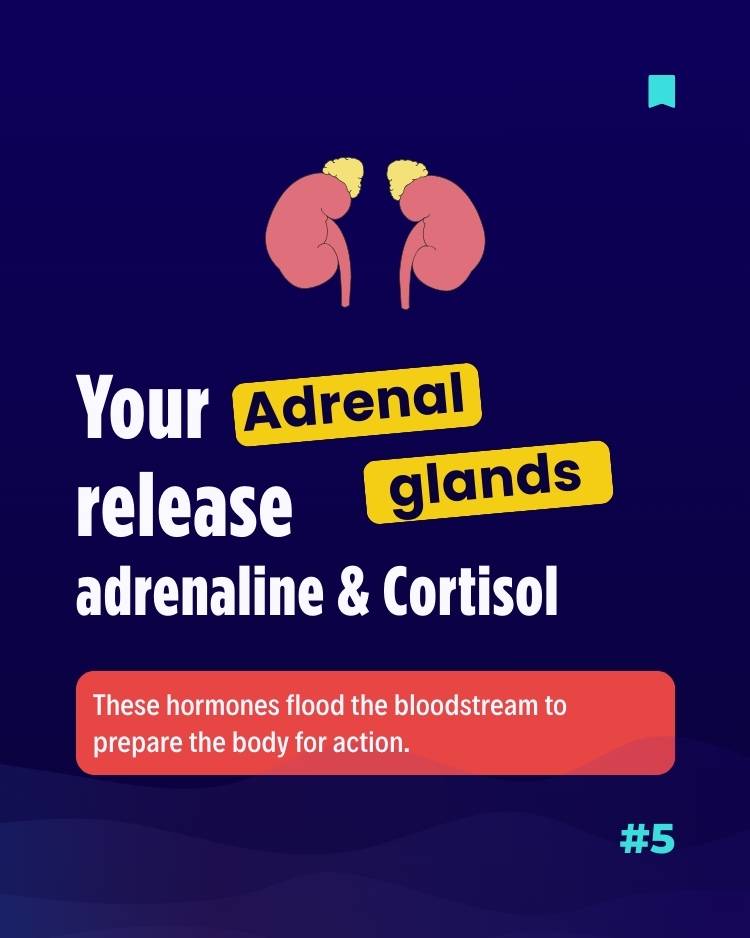
2. The adrenal glands release cortisol and adrenaline
These 2 hormones are your survival teammates.
- Adrenaline mobilizes you instantly.
- Cortisol keeps you alert for as long as the threat remains.
But with chronic stress or old trauma patterns, cortisol may stay elevated even after the moment is over.
That's your body trying to protect you.
This is the physiology beneath the phrase: "It's just what my body does."
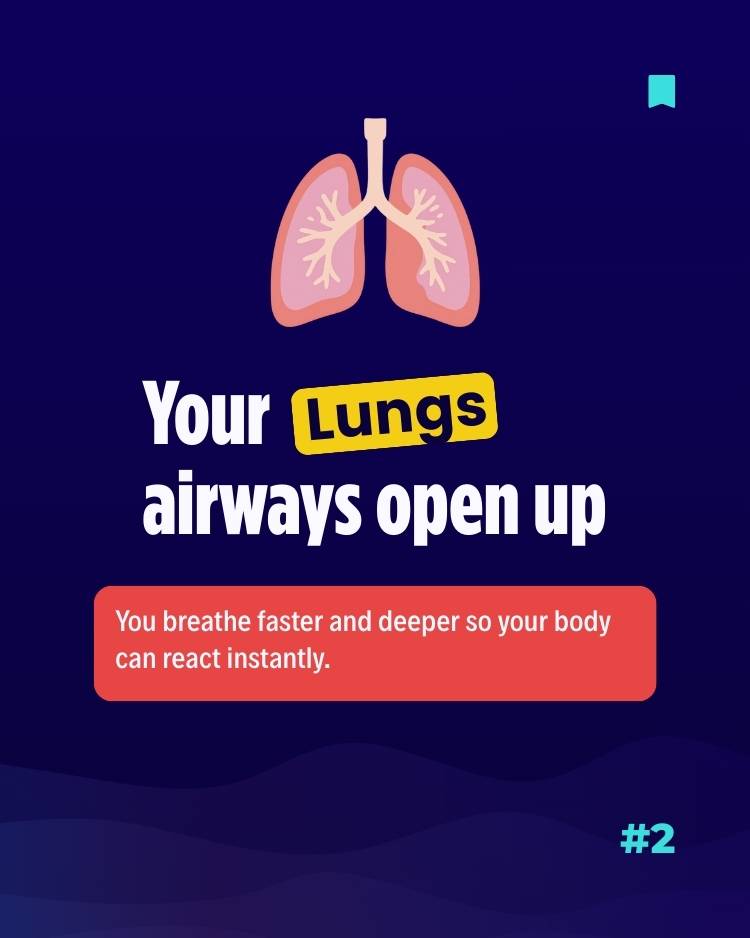
3. Your breathing changes
Your lungs open to pull in more oxygen. Breathing becomes faster or shallower.
People who have lived through trauma often develop protective breathing patterns: holding the breath, bracing, chronic shallow breathing. Their body remembers what it needed to survive.
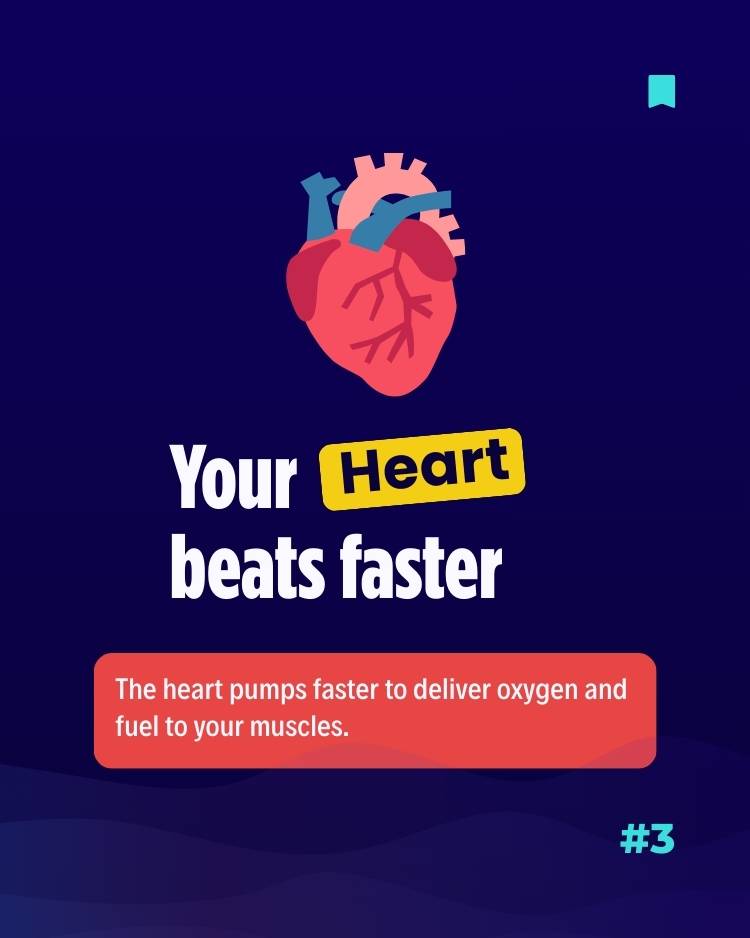
4. Your heart accelerates
Your heart pumps harder to prepare your body for action.
This can feel like:
- Restlessness
- Internal buzzing
- Pounding heart
- Difficulty relaxing even when you want to
All of this is called chronic stress physiology, not a personality trait.
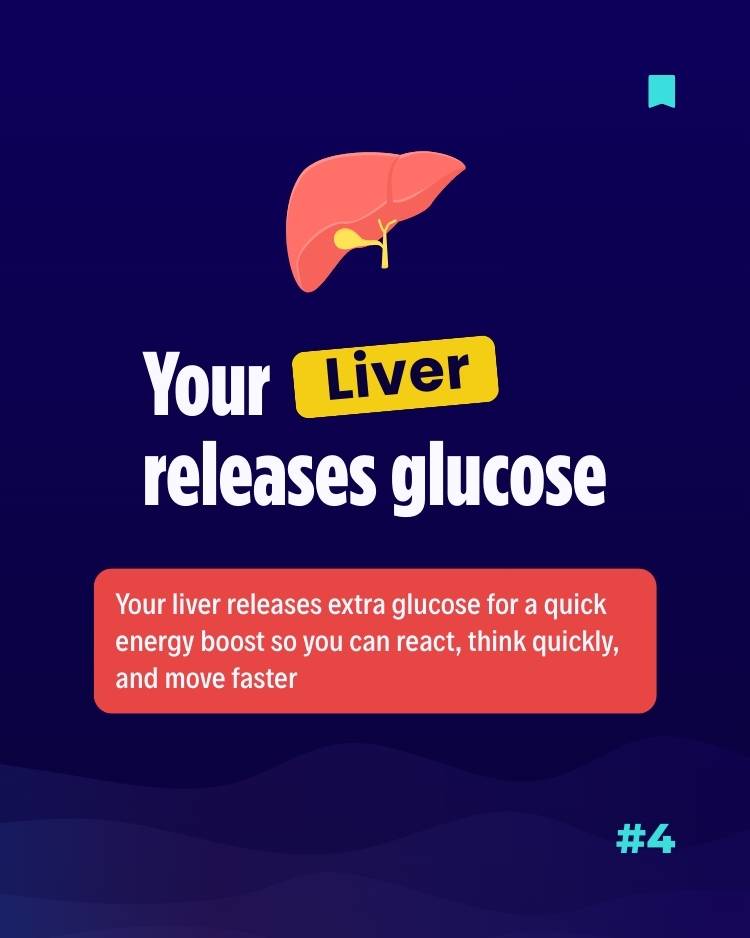
5. The liver releases glucose for immediate energy
Your system gives you quick fuel.
This is why chronic stress can affect blood sugar, hunger cues, and exhaustion cycles.
Your biology is preparing for survival.
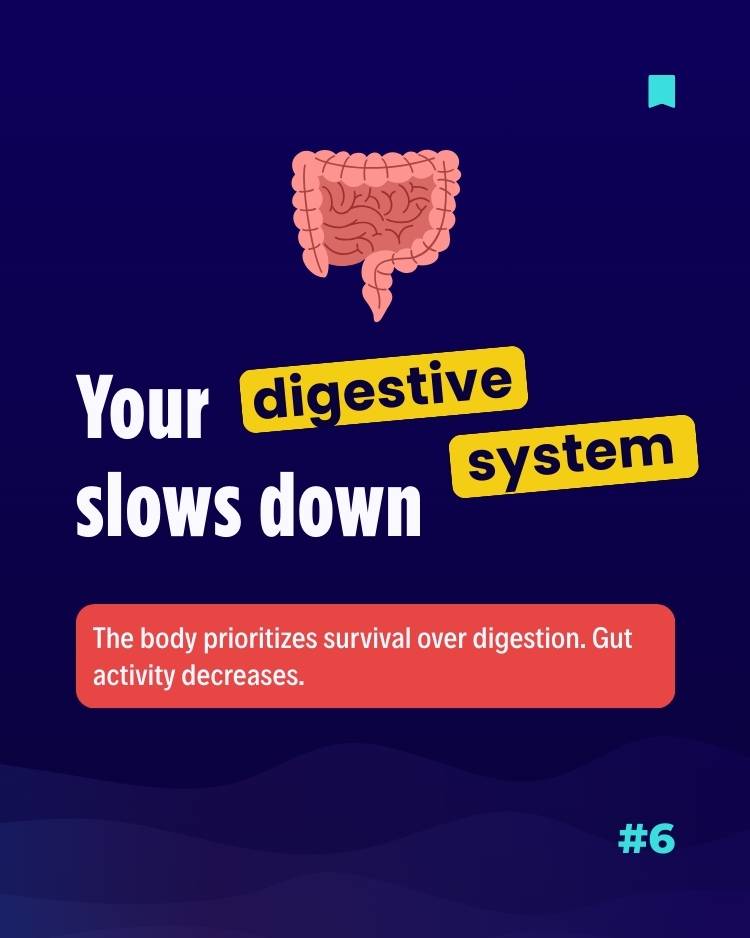
6. Digestion slows down
When your nervous system senses danger, digestion becomes non-essential. It's not a priority.
This is why stress and trauma are often directly linked with:
- Bloating
- Nausea
- IBS-like symptoms
- Appetite swings
The body is prioritizing survival over assimilation.
The lemon tart doesn't matter if your system thinks you're in danger.
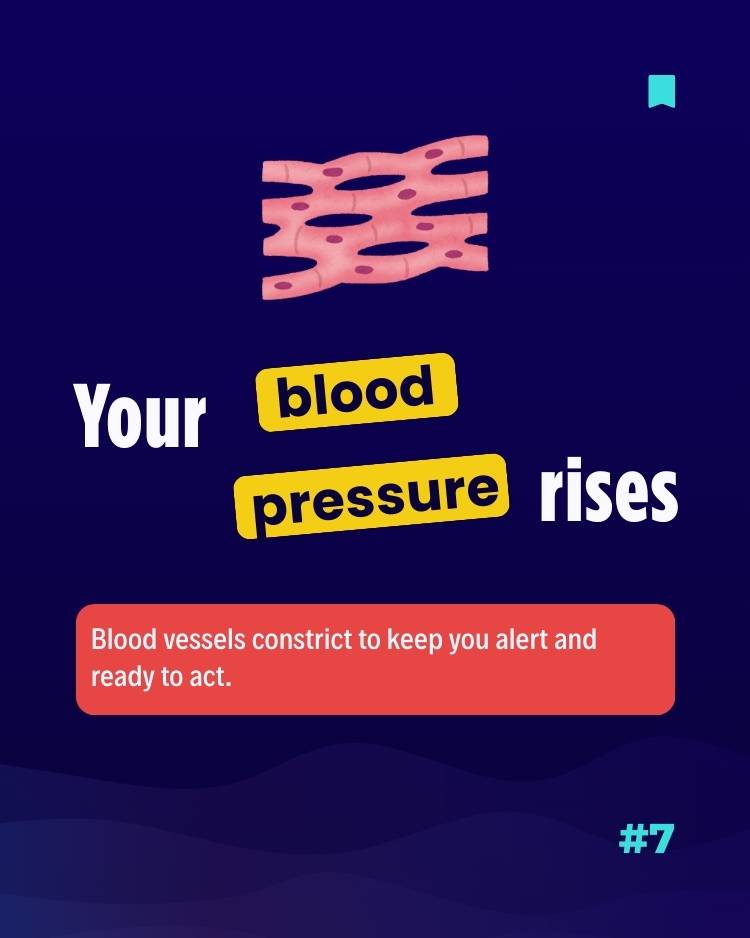
7. Blood vessels constrict
Your body increases blood pressure to heighten alertness.
When stress doesn't turn off: How trauma accelerates burnout
Here is where trauma physiology and chronic stress meet.
Your stress response was meant to protect you for short bursts, not for years.
But unresolved trauma, emotional suppression, high-pressure environments, and insufficient recovery time can turn emergency mode into your default state.
This is burnout physiology:
- Your system becomes unable to relax
- Your brain stays alert even when you're tired
- Your body interprets small stressors as major threats
- Exhaustion and overwhelm begin to feel permanent
People often interpret burnout as failure.
In reality, it's a sign of loyalty—your nervous system has been protecting you nonstop.
Burnout isn't "too much stress." It's too little safety.
Your body can't tell the difference between a raised eyebrow in a meeting, an unread message, and a charging bear.
It only knows one truth: Protect. Protect. Protect.
How Trauma-informed burnout recovery begins
Your mind can't override your biology. Recovery doesn't start with thinking differently or trying harder.
Healing begins when your body receives consistent, gentle evidence that it is safe enough to downshift.
Not completely safe or regulated, just safe enough.
This evidence might look like:
Slow, grounded breathing your body can tolerate
Just enough to soften the system.
Small reductions in sensory load
Dimming lights, reducing noise, stepping away from overstimulation.
Micro-moments of safety
The warmth of a mug. A weighted blanket. A hand resting on your chest.
These moments seem tiny, but they are physiologically corrective.
Boundaries that protect your capacity
Not from a place of avoidance, but from honouring what your system can hold.
Genuine connection
Regulation is co-regulation. Healing happens in safe relationships.
Trauma-informed burnout recovery is not about forcing calm. It's about creating conditions where calm becomes possible.
Your nervous system is adaptable
And that changes everything.
Your nervous system is capable of change, its' like a muscle.
Just as trauma shapes it, healing can reshape it.
With enough repetition of safety:
- Cortisol levels drop
- Digestion restarts
- Sleep improves
- Emotional regulation returns
- Cognitive clarity increases
- Energy stabilizes
It happens through relationship with yourself, your body, your environment, and others.
From shame to understanding
When you understand that your body is doing what it was designed to do, you shift from:
"Why am I like this?"
to
"What is my body protecting me from?"
This question alone creates a doorway to gentleness.
What comes next
If you're curious about trauma-informed approaches to stress, or you want to rebuild your internal capacity without pushing yourself harder, I share resources and frameworks regularly on Linkedin
And if you're navigating burnout or chronic stress right now, especially if you work in a helping profession, you don't have to do this alone.
Your body is a messenger and speaks the language of protection as opposed as a failure.
 Je suis Webmarketer et ma mission est d'aider les entrepreneurs du changement à se construire une image qui leur ressemble sur le web et communiquer leurs messages au monde. Ici je vous partage des infos sur le web en général, DIVI, mon thème Wordpress de prédilection, et la vie de freelance & digital nomade. Bonne lecture :)