

These content ideas are drawn from years of digital marketing experience, including my current work providing marketing for therapists. The ranking prioritises ideas that build long-term authority and connect with ideal clients over short-term viral social media tricks. Each one is designed to be adapted to your unique voice, specialisation, and ethical framework, helping you show up online as the practitioner you actually are.

The Impact of Blog Content on Your Practice
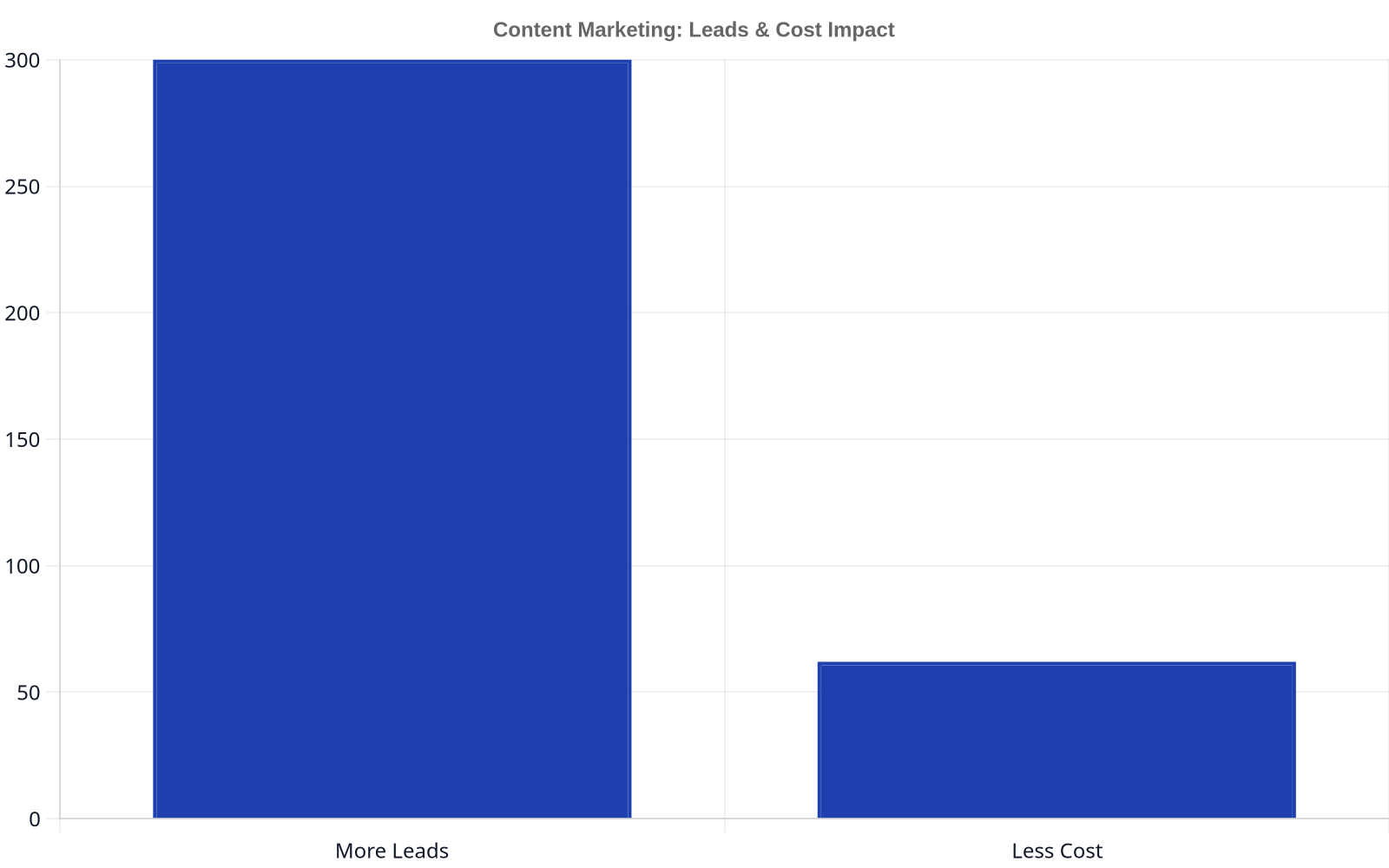
The fundamental benefit of creating content for your blog is that it builds a library of assets that work for your practice 24/7. Unlike a social media post that disappears in a day, a well-written blog post can attract ideal clients for years. It's not just theory. Content marketing costs 62% less than traditional marketing and generates about three times as many leads.
By consistently sharing your expertise, you answer a potential client's unspoken questions, they might secretly ask on chatGPT, ease their anxieties about starting therapy, and establish yourself as a trusted authority in your field long before they ever reach out.
1. Deconstruct a clinical concept
Take one term you use daily in session - like 'attachment styles', 'cognitive distortions', or 'nervous system regulation' - and explain it for a layperson. Use an analogy. Your brain is the most used organ in your daily life; help people understand how it works. Don't just define it; show what it looks like in a real-life situation. For example, explain how an anxious attachment style might show up in how someone communicates with their partner via text message. Providing education that empowers people and builds immense trust is what this is about. Translating complex psychology into usable insight.
- Best for: Establishing expertise and providing genuine, psychoeducational value.
- Watch out for: Using overly academic language or jargon. The goal is clarity.
2. The "Client Question" post
Think of the top 5 questions new clients almost always ask in their 1st few sessions. Anonymise and generalise them, then answer each one in a dedicated blog post. These could be practical questions like, "What happens in a 1st therapy session?" or deeper fears like, "What if I have nothing to talk about?" This content is pure gold for search engine optimisation (SEO) and Generative Engine Optimization (GEO) because you are directly answering the exact phrases people type when they are considering therapy. It shows you understand their fears and concerns and are already prepared to meet them with compassion.
- Best for: Capturing high-intent search traffic and reducing client anxiety before they even contact you.
- Watch out for: Sharing any detail that could identify a specific client. This must be about the pattern, not the person.
3. Your professional origin story (Theright way)
People want to know who they are trusting with their innermost thoughts. Share the story of why you became a therapist. It's a structured narrative: what was the initial wound or observation that sparked your interest? What was the turn, the moment you decided to pursue this path? How did you climb through your training? And what is the reframe - how does your past inform the unique way you practise today? Sharing your 'why' creates a powerful human connection that a list of credentials never can. Authenticity without expertise is a diary; expertise without authenticity is a performance. This post is where you balance both.
- Best for: Building a deep, personal connection with readers and differentiating yourself from other practitioners.
Watch out for: Oversharing or making it about your own healing journey. The focus should always be on how your experience makes you a better therapist for them*.
4. Write about how your niche shows up in culture
If you're a couples counsellor, analyse the relationship dynamics in a popular TV show. If you work with trauma, discuss how a recent film portrays the recovery process. This type of content connects your clinical expertise to the world your clients live in. It makes your work relevant and demonstrates that you understand the cultural context of their struggles. According to the thought leadership impact study, decision-makers spend significant time with thought leadership content because it helps them understand emerging trends.
- Best for: Showcasing your specialisation and becoming a go-to voice on a specific topic.
- Watch out for: Sounding like a critic. The tone should be observational and educational, using the cultural reference as a jumping-off point for a deeper discussion.
5. Address a common misconception in your field
What's one thing everyone gets wrong about therapy, your specialisation, or mental health in general? Write a post that debunks it. "Why Therapy isn't just for crisis." "The truth about 'chemical imbalances'." "What people get wrong about grief." These are evergreen topics that directly challenge stigma and misinformation. By taking a clear, evidence-based stance, you position yourself as a thought leader and a source of truth in a very noisy online world.
- Best for: Creating timeless, shareable content that tackles stigma head-on.
- Watch out for: Being combative or dismissive. Acknowledge why the misconception exists before gently and authoritatively correcting it.
6. Create an Ethical Boundary Walkthrough
Many therapists avoid content creation because they are afraid of violating ethical codes or blurring boundaries. Lean into this. Write a post explaining how you maintain boundaries in your online presence. Discuss your policies on social media interactions, the difference between psychoeducation and therapy, and why you can't give specific advice online. This not only builds trust with potential clients by showing your professionalism, but it also serves as a model for other practitioners. The American Medical Association provides clear guidance on professionalism in social media that can inform your own ethical framework.
- Best for: Building trust with clients and colleagues and addressing a major barrier to content creation for therapists.
- Watch out for: Sounding defensive. Frame it as a positive commitment to client safety and professional integrity.
7. Build a foundational SEO pillar page
A pillar page is a long, comprehensive article on a core topic for your practice - for example, "The complete guide to trauma therapy in Lisbon" or "Understanding anxiety treatment options." This page should broadly cover the topic and then link out to shorter, more specific 'cluster' posts (like the other ideas in this list). This structure signals to Google that you are an authority on that subject. A good starting point is Google's own Search Engine Optimization (SEO) Starter Guide, which explains the importance of organising your site content logically. It's a bigger project, but one pillar page can become the cornerstone of your entire content strategy, bringing in consistent traffic for years. This is a key part of how we help therapists and psychologists get found by the people who need them.
- Best for: Long-term organic traffic growth and establishing topical authority with search engines.
- Watch out for: Trying to cover too much. Pick a focused topic and go deep rather than broad. You can always build more pillars later.
8. Map your practical content workflow
One of the biggest hurdles is time. Many therapists are already on the edge of burnout. Don't fall into the trap of hyperperformance culture that demands daily posting. Instead, create a realistic, sustainable workflow and share it with your readers. Explain how you batch your content - maybe you set aside 2 hours on the first Friday of every month to outline four posts. Talk about your tools.
I created an AI agent that writes drafts for me. It knows my notes, my entire background, my core values, and the topics I want to discuss, and it builds the content based on that. Every week, I spend 3 hours reviewing and editing these drafts. This system helps me overcome my fear of writing in English (since I'm French and have a very strong accent) and brings me closer to my goal of sharing as much free value as possible with therapist and ethical small businesses.
Sharing your process makes it feel possible for your clients and colleagues, and fights the myth that you have to be 'on' all the time.
- Best for: Overcoming writer's block and the paralysis of perfectionism.
- Watch out for: Presenting a system that only works for you. Offer principles (like batching or re-purposing) that others can adapt.

Content Ideas at a Glance
| Content Idea | Primary Goal | Best For |
|---|---|---|
| 1. Deconstruct a Concept | Education & Trust | Establishing deep expertise |
| 2. Answer Client Questions | High-Intent SEO | Reducing pre-therapy anxiety |
| 3. Professional Origin Story | Personal Connection | Differentiating your practice |
| 4. Culture Commentary | Niche Authority | Showing modern relevance |
| 5. Misconception Debunked | Evergreen & Shareable | Fighting stigma with authority |
| 6. Ethical Walkthrough | Building Trust | Demonstrating professionalism |
| 7. SEO Pillar Page | Long-Term Traffic | Becoming a topical authority |
| 8. Share Your Workflow | Demystifying Process | Overcoming content burnout |
This isn't an exhaustive list. The core principle is to translate what you do in the therapy room into generous, ethical, and helpful content for the public. It's not self-promotion in the cringey, salesy sense. It's an act of service that allows the people who need your specific skills to find their way to you. Some weeks you might write 2 posts, some weeks 0. The goal is sustainability.
I hope this article inspire you building a digital presence that reflects the integrity of your clinical practice. It takes time, but it builds an asset that serves you, your practice, and your future clients for years to come. If you want to explore a strategy that feels authentic to you, let's schedule a call.
Further reading
FAQ
How do I find time for creating content for therapist blogs when I'm already so busy?
Forget the idea that you need to post constantly. That's a symptom of hyperperformance culture. Instead, try batching. Set aside a single 2-3 hour block once a month to plan and draft your posts for the entire month. This is more efficient than trying to write in short bursts. Also, use tools. Voice-record your thoughts while on a walk and use transcription software. The goal is a sustainable rhythm, not a frantic pace.
Is it a HIPAA violation to blog about client experiences?
It can be if not handled with extreme care. The rule is simple: never share any information that could potentially identify a client. This means no specific details, no unique scenarios, and no direct quotes. Instead, talk about themes, patterns, and common struggles you see across many clients. Focus on the psychoeducational point, using a composite or completely hypothetical example. Always prioritise client confidentiality above content creation.
How do I measure the success of my blog content?
Look beyond just page views. The most important metric is qualified inquiries. Are people who mention your blog posts reaching out to book a consultation? You can track this by adding a simple "How did you hear about us?" field to your contact form. Other indicators include time on page (are people actually reading?), newsletter sign-ups from your blog, and keyword rankings for your core topics. Success is attracting the right clients, not just any traffic.
Do I need to be an expert writer to have a successful therapist blog?
No. You need to be a clear and generous expert in your clinical field. Your clients are not looking for prize-winning prose; they are looking for help, understanding, and a sense of connection. Write like you speak. A conversational, authentic tone is far more effective than trying to sound like an academic journal. Authenticity connects more than perfect grammar ever will.
Should my blog have a specific niche?
While some marketing advice insists you must define a narrow niche before you even start, it's often more realistic to find it along the way. Start by writing about the topics and clients that genuinely energise you. Over time, you'll notice which posts resonate most with readers and which ones lead to the best-fit client inquiries. Your niche is often found through the act of creating, not decided in a vacuum. It will emerge from the intersection of your expertise and your audience's needs.