Tribulations d’une digital nomad en Bolivie
Reading Time: ( Word Count: )
The question of psychotrauma etiology, where trauma comes from and how it takes root, is far older than modern psychology. Yet paradoxically, it is only quite recently that trauma has been fully recognised as a legitimate psychological injury rather than a personal weakness, simulation, or moral failing.
From antiquity to the end of the twentieth century, the history of psychotrauma reveals a long struggle between clinical observation, social denial, and political interests.
“
Your body can’t tell the difference between a raised eyebrow in a meeting, an unread message, or a lion chasing you.
It only knows one truth: Protect. Protect. Protect.
”
Early Traces: Trauma existed before it had a name
The earliest descriptions of psychotraumatic reactions date back more than two thousand years. Ancient texts already describe soldiers overwhelmed by fear, blindness, nightmares, or behavioral collapse following battle. Herodotus recounts the case of Epizelus, struck by sudden blindness during the Battle of Marathon, without physical injury—a phenomenon that today would be recognised as a conversion symptom
Stress alert 2 - Your lungs open up
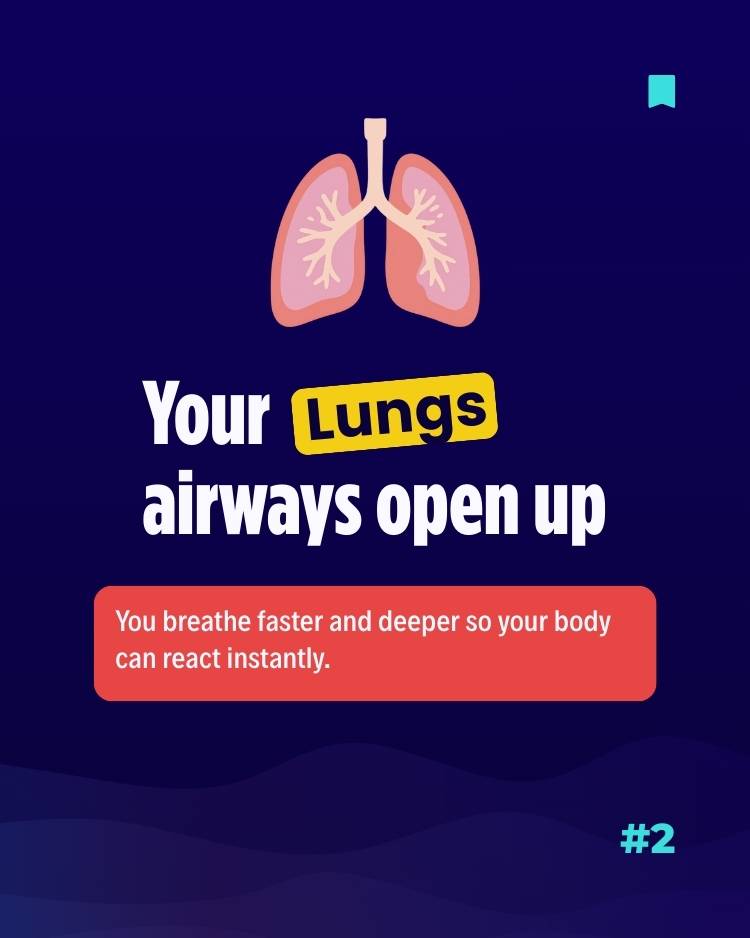
Your body wants oxygen as quick as possible.
Breathing becomes faster and deeper so that if you need to react, you can. This is why stressful days often come with shallow or erratic breathing. Can you remember this days when you almost forget to breathe an feel your chest tight?
It’s not being “bad at breathing.”, it’s the way a body breathes when it thinks it’s not safe.
Moreover, people who have lived through trauma often develop protective breathing patterns: holding the breath, bracing, chronic shallow breathing.
Stress alert 3 - Your brain pulls the fire alarm
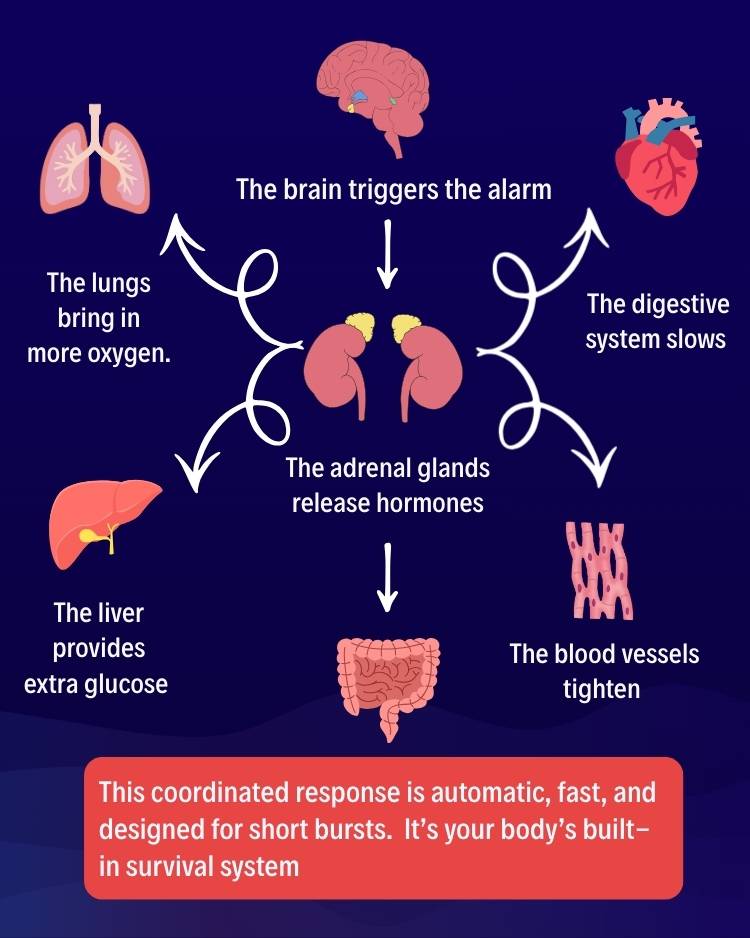
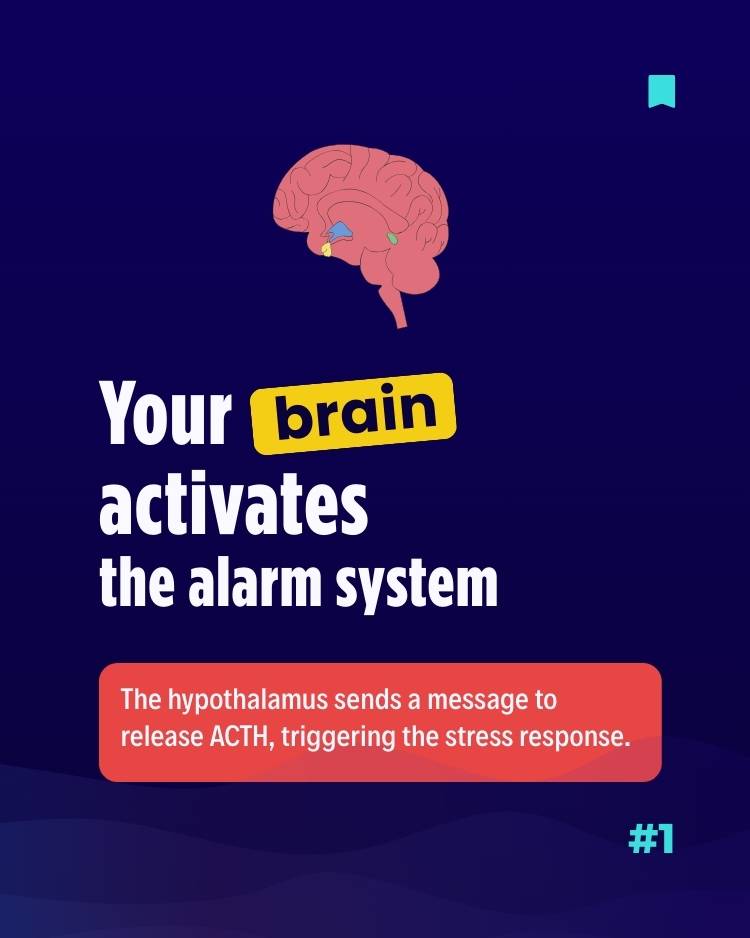
Everything begins in the hypothalamus, a tiny structure at the base of your brain responsible for threat detection.
When it senses anything that feels unsafe (physical, emotional, or even anticipatory) it sends a message to secrete ACTH, a hormone that mobilizes your entire system.
This isn’t a conscious choice.
You don’t sit there and decide, “I think I’ll now activate my stress response.”
Your body does it for you, because survival isn’t a cognitive negotiation. It’s instinct.
The important part:
Your brain doesn’t distinguish between a charging bear and a confrontational email. It only registers threat.
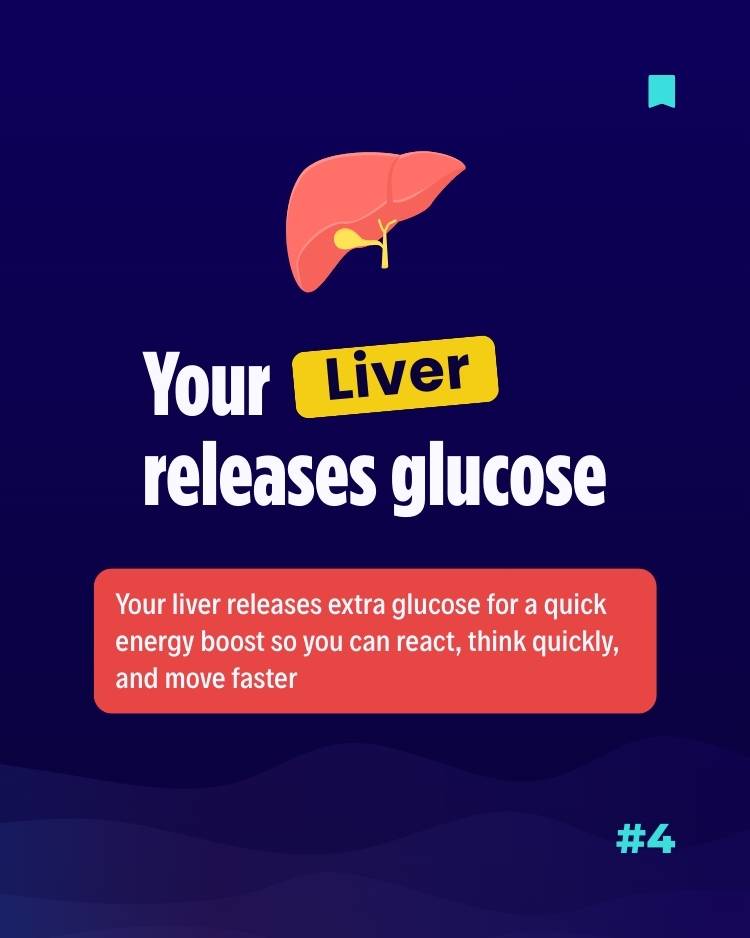
Stress alert 4 - Your liver releases glucose into the bloodstream
Your system wants quick energy so you can think fast and move fast.
This is one reason chronic stress can influence blood sugar, exhaustion cycles, and even appetite.
Your body is preparing you to survive.
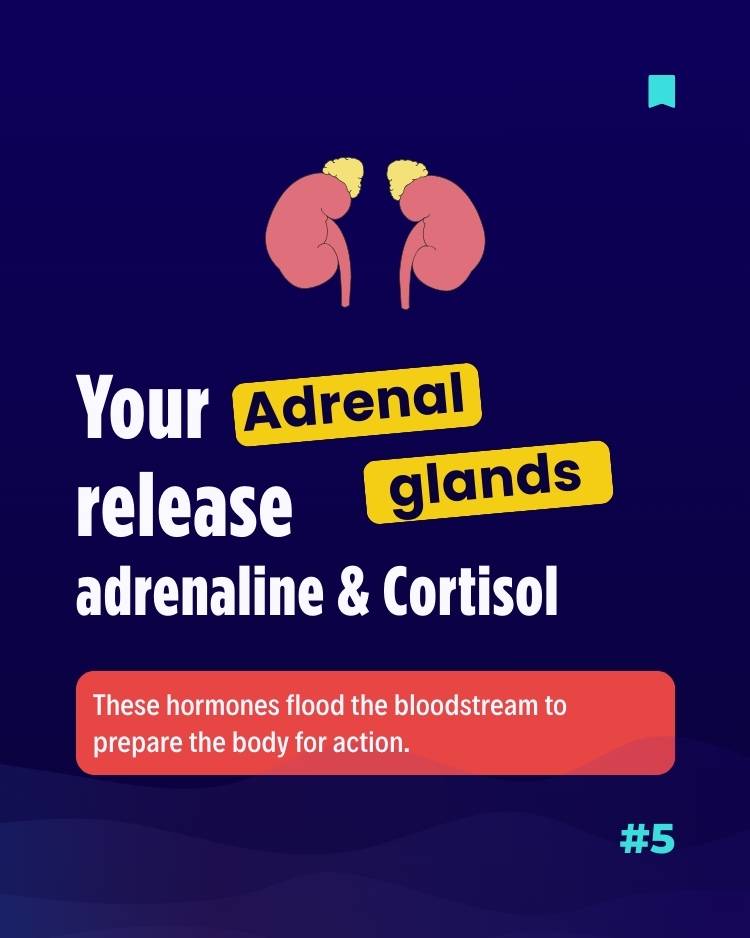
Stress alert 5 - Your Adrenal Glands flood your system with cortisol and adrenaline
Once the signal is sent, your adrenal glands mobilize your primary stress hormones.
-
Adrenaline kicks in first. It’s fast, sharp, mobilizing.
-
Cortisol follows. It stays longer, keeps you alert, and fuels the system.
These hormones help you survive. They wake you up, sharpen you, and prepare you for anything that requires immediate action.
But they were meant for short bursts, not endless days of pressure.
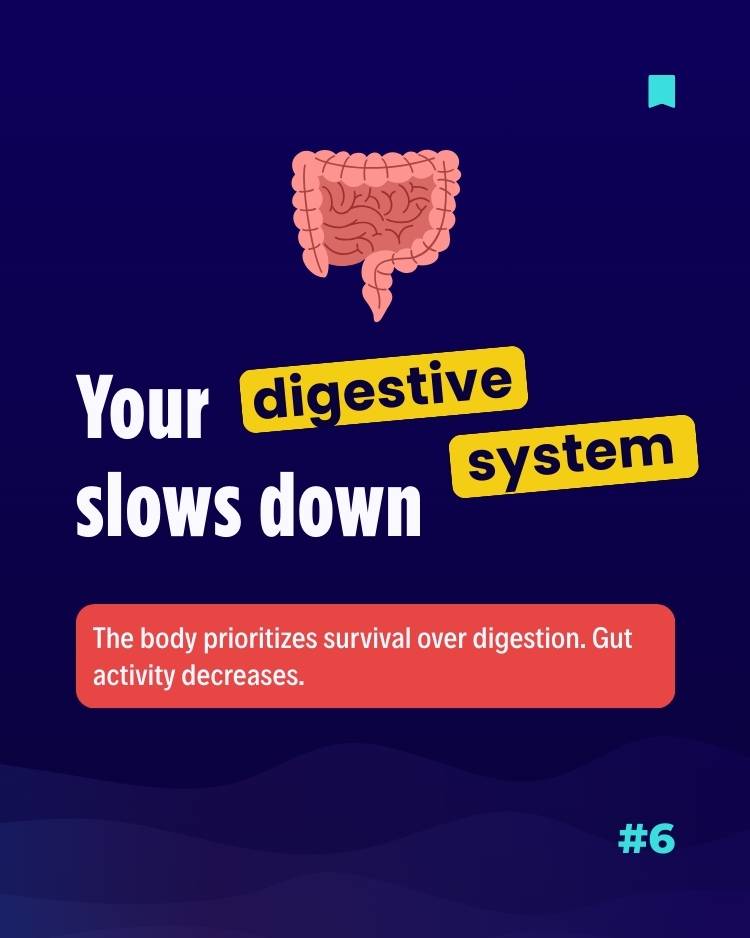
Stress alert 6 - Digestion slows down
When your nervous system senses danger, digestion becomes non-essential.
This is why stress and trauma are often directly linked with:
-
bloating
-
nausea
-
IBS-like symptoms
-
appetite swings
Your body is prioritizing survival over assimilation.
The lemon tarte you had for lunch doesn’t matter if your system thinks you’re in danger.
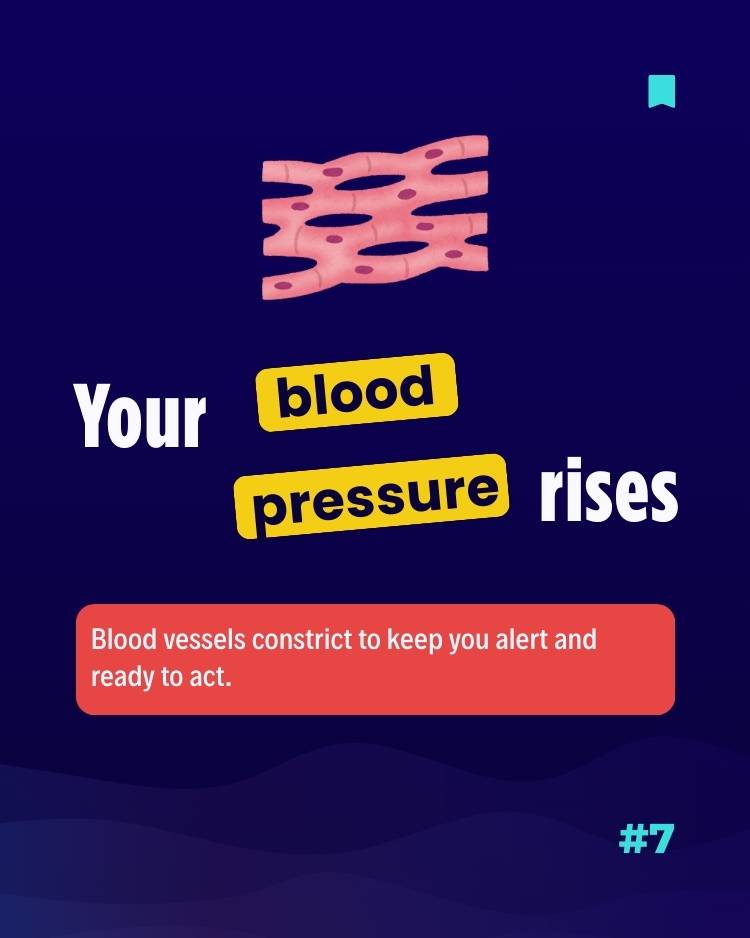
Stress alert 7 - Blood Vessels constrict + Blood Pressure rises
When your body perceives threat (real or not), part of the stress response involves narrowing (constriction) of blood vessels. This process is called vasoconstriction.
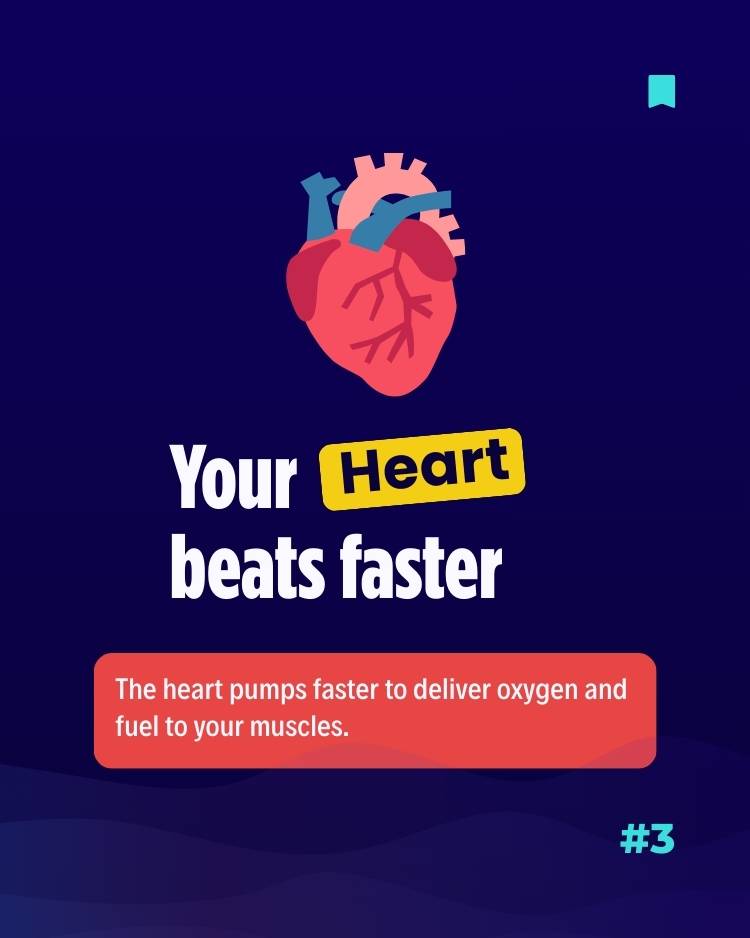
Because your blood vessels are narrower, your heart has to pump harder to push blood through, increasing resistance in your vascular system. This raises your overall blood pressure.
In short:
vasoconstriction → increased vascular resistance → elevated blood pressure → faster, harder blood flow.
Here is where trauma physiology and chronic stress meet.
Your stress response was built to protect you for short bursts.
But unresolved trauma, emotional suppression, high-pressure environments, and insufficient recovery time can turn emergency mode into your default state.
-
Your system becomes unable to relax.
-
Your brain stays alert even when you’re tired.
-
Your body interprets small stressors as major threats.
-
Exhaustion and overwhelm begin to feel permanent.
People often interpret burnout as something negative, a failure.
To my point of view, it’s a sign of loyalty. Your magical body (aka nervous system) has been protecting you nonstop.
What if burnout wasn’t “too much stress” but too little safety?